The Death of the Virgin
Caravaggio
1601–1606
Oil on canvas
369 cm × 245 cm (145 in × 96 in)
Paintings
Denon Wing, Level 1, Room 710 (Grande Galerie)
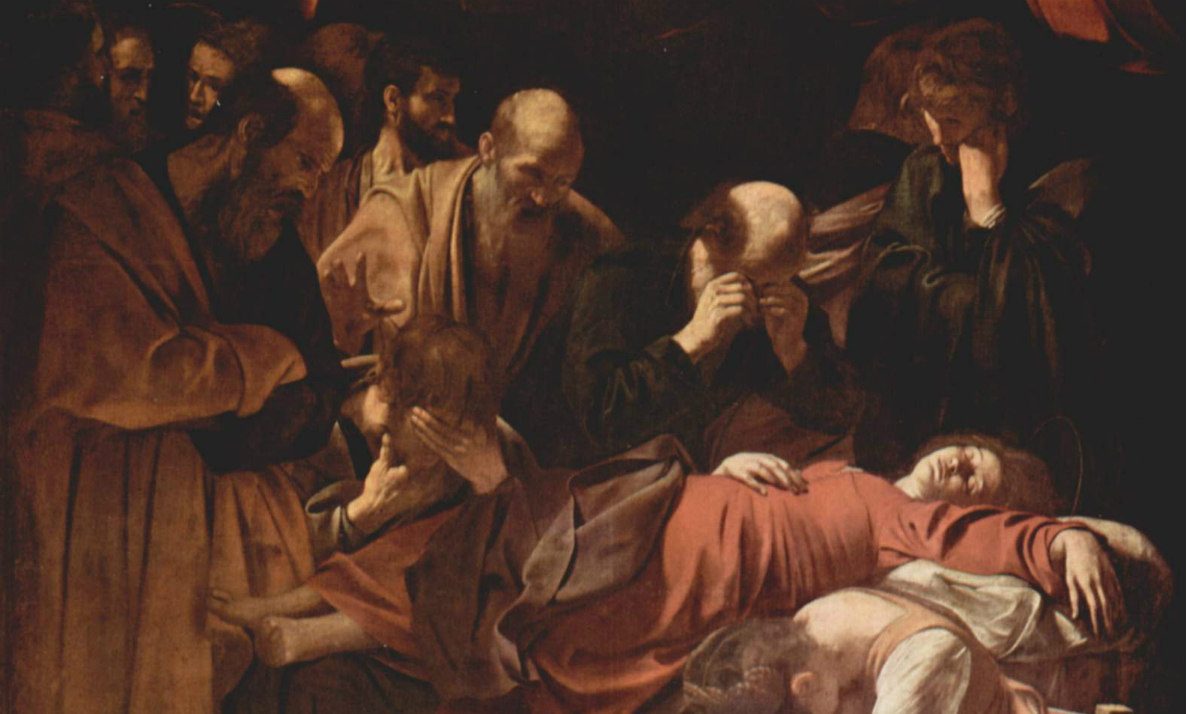
The Death of the Virgin was painted by Caravaggio between 1601 and 1606 for the church of Santa Maria della Scala in Trastevere, Rome. It depicts the moment of the Virgin Mary's death, surrounded by grieving apostles. The painting was rejected by the church that commissioned it because Caravaggio depicted the Virgin as an ordinary dead woman with a swollen body and bare feet, a treatment considered scandalous and irreverent.
The dramatic use of chiaroscuro—Caravaggio's signature interplay of deep shadow and concentrated light—creates a profoundly somber and theatrical atmosphere. A single great swath of red drapery hangs above the scene, its rich crimson color both framing the composition and symbolizing both royalty and suffering.
After its rejection, the painting was purchased on the advice of Peter Paul Rubens by the Duke of Mantua, Vincenzo I Gonzaga. It later passed through the collection of Charles I of England before entering the French royal collections and ultimately the Louvre. Today it is recognized as one of Caravaggio's most powerful and emotionally affecting works.