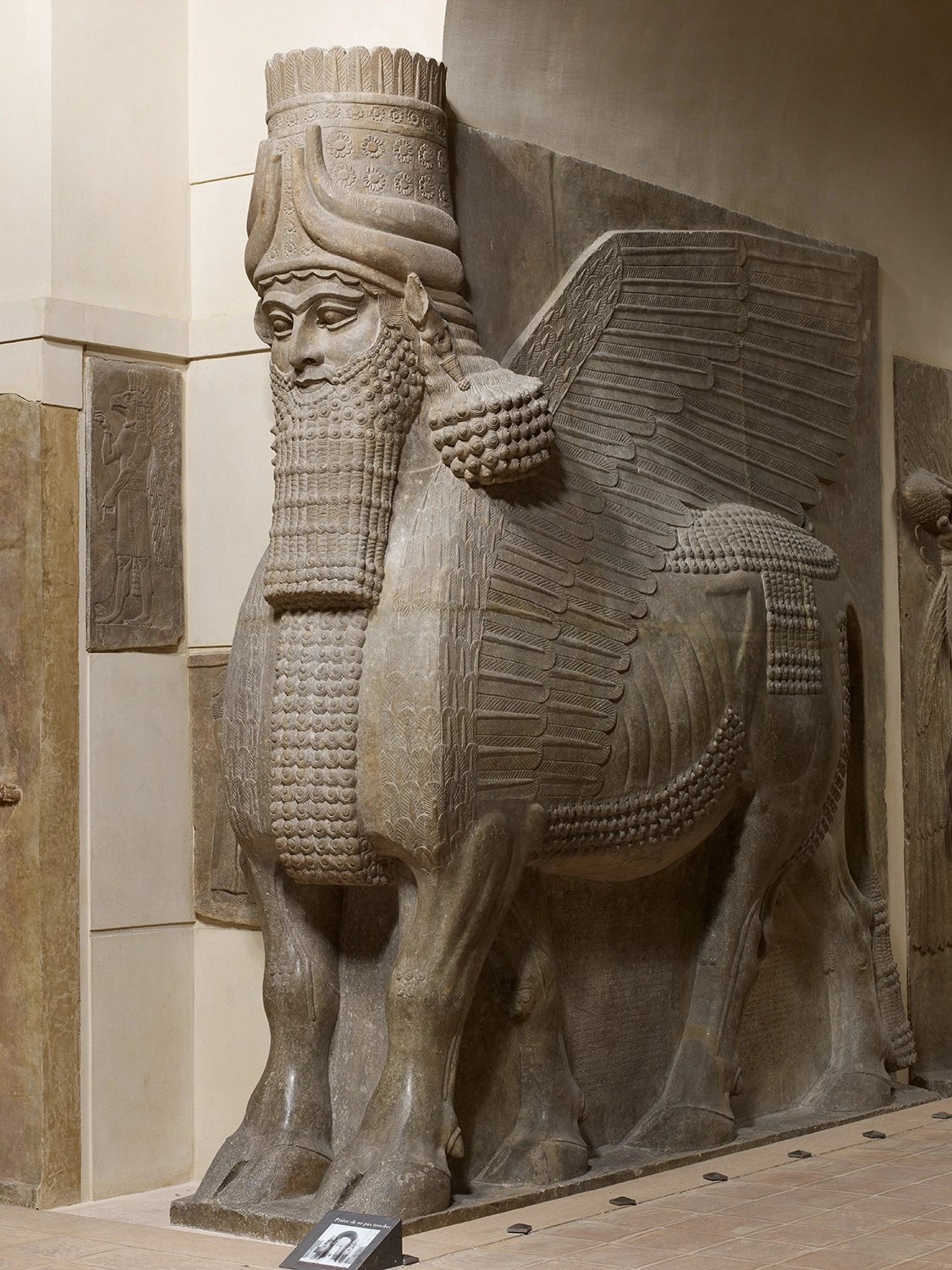
Winged Bulls (Lamassu) from Khorsabad
Assyrian
c. 721–705 BC
Alabaster (gypsum)
440 cm (14 ft 5 in) height
Near Eastern Antiquities
Richelieu Wing, Ground Floor, Room 229 (Cour Khorsabad)
The colossal Winged Bulls, or Lamassu, are monumental guardian figures that once flanked the gates of the palace of Sargon II at Dur-Sharrukin (modern Khorsabad, Iraq). Standing over four meters tall and carved from single blocks of gypsum alabaster, each figure combines a human head wearing a horned crown, the body of a bull, and the wings of an eagle—a composite being that symbolized supernatural protective power.
A remarkable feature of these sculptures is their ingenious five-legged design: viewed from the front, the bull appears to stand firmly on two legs; viewed from the side, it appears to stride forward on four legs. This visual trick ensured the guardian appeared both imposing and dynamic from any angle of approach.
The Khorsabad sculptures were excavated by French archaeologist Paul-Émile Botta between 1843 and 1844, making them among the first major Assyrian discoveries to reach Europe. They were transported in pieces down the Tigris River and across the Mediterranean to Paris, where they became foundational works of the Louvre's Near Eastern Antiquities collection and sparked widespread European fascination with ancient Mesopotamian civilization.
