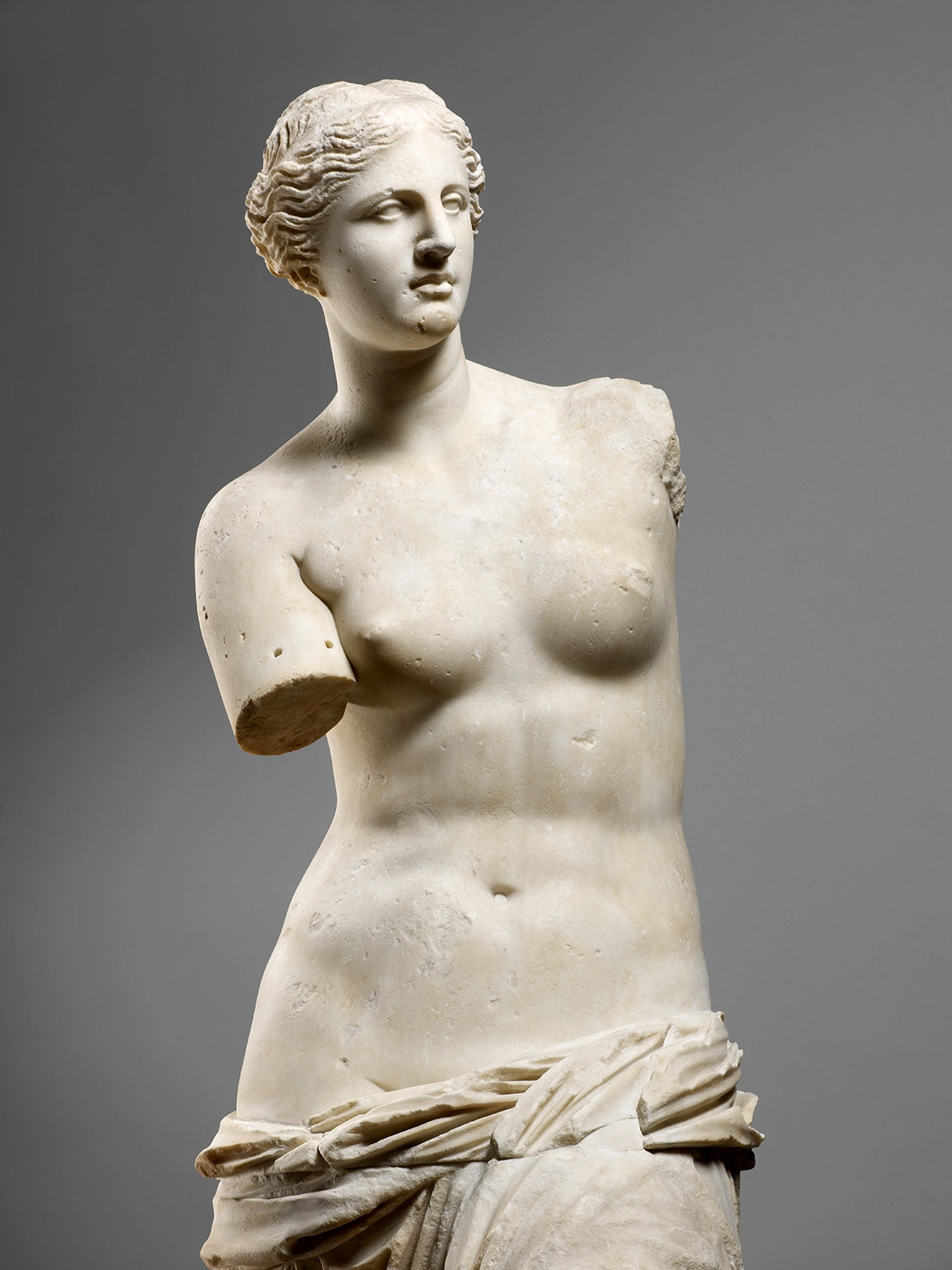
Winged Victory of Samothrace
Unknown
c. 200–190 BC
Parian marble (figure) and grey Lartos marble (ship)
328 cm (10 ft 9 in) height including base
Greek Antiquities
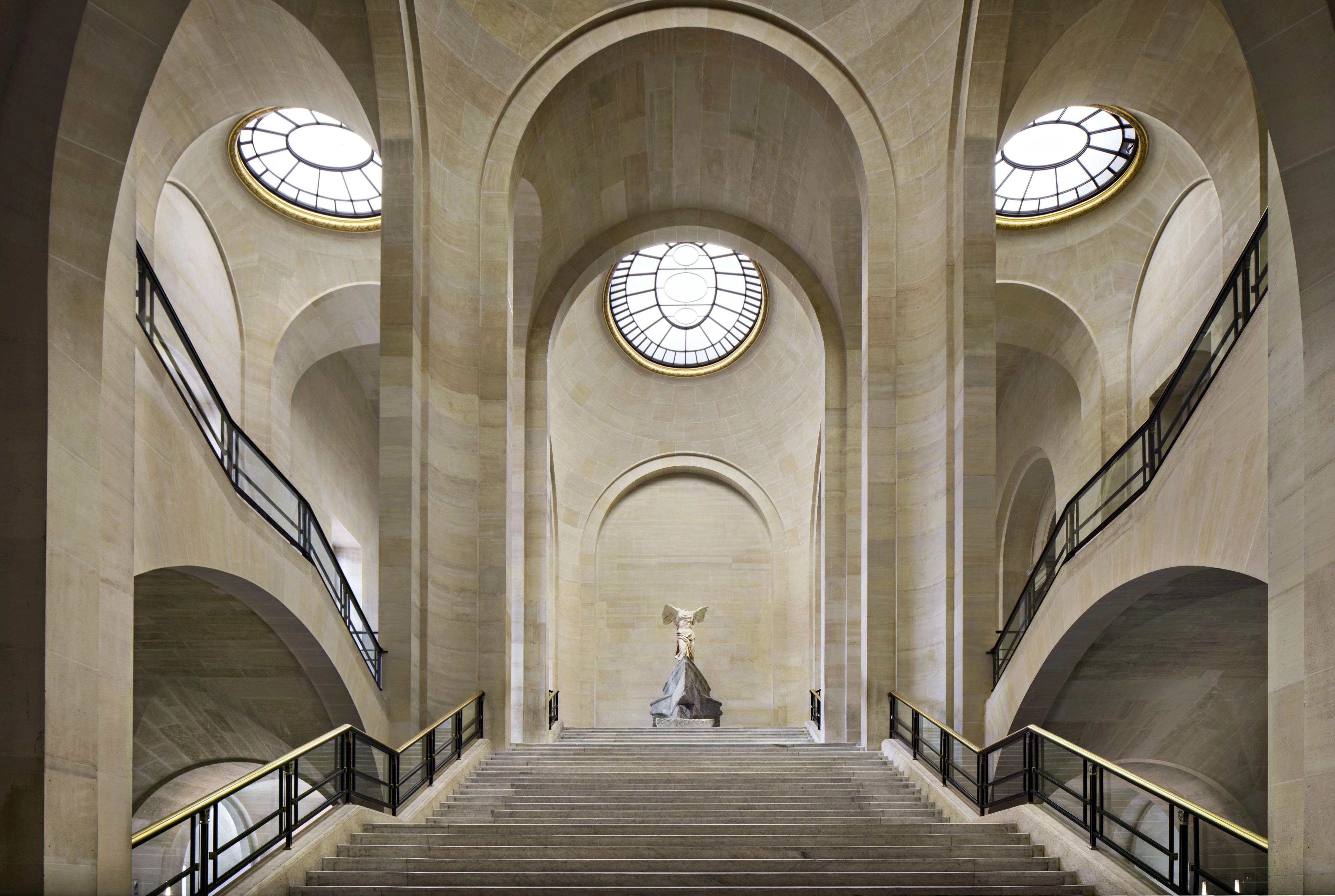
Denon Wing, Main Staircase (Daru Staircase)
Discovered in 1863 on the Greek island of Samothrace by French consul and amateur archaeologist Charles Champoiseau, this monumental Hellenistic masterpiece depicts Nike, the winged goddess of victory, alighting triumphantly on the prow of a warship. It is believed to have been created around 190 BC as a votive offering to commemorate a major naval victory, possibly by the Rhodians.
The sculpture is celebrated for the extraordinary virtuosity of its carved drapery, which appears to billow and cling to the figure's body as if whipped by a strong sea wind. This mastery of depicting fabric in motion, combined with the dramatic forward-leaning pose, creates an overwhelming sense of movement and power that few ancient works can rival.
Installed at the top of the grand Daru Staircase in the Denon Wing, the Winged Victory commands one of the most dramatic display settings in any museum worldwide. The statue underwent a major restoration between 2013 and 2014, during which decades of grime were carefully removed and a missing section of the right wing was completed with plaster to better suggest the sculpture's original symmetry.